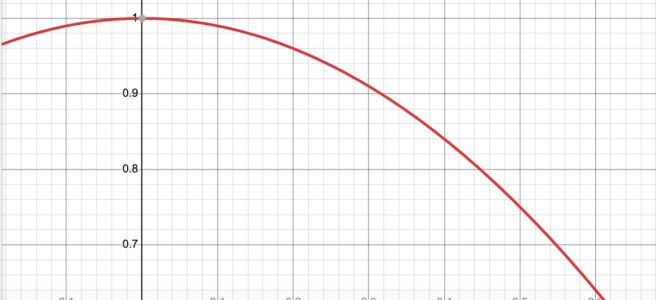
As a teacher of SAT Math problems, I was stumped when I thought about the implications of the following SAT math problem more deeply: what happens to the area of a rectangle when its length increases by 30% and its width decreases by 30%?
Solving the problem itself is algebraically straightforward. We start by letting L= the original length and W= the original width. Using these variables, the original area of the rectangle would be LW, which represents length times width.

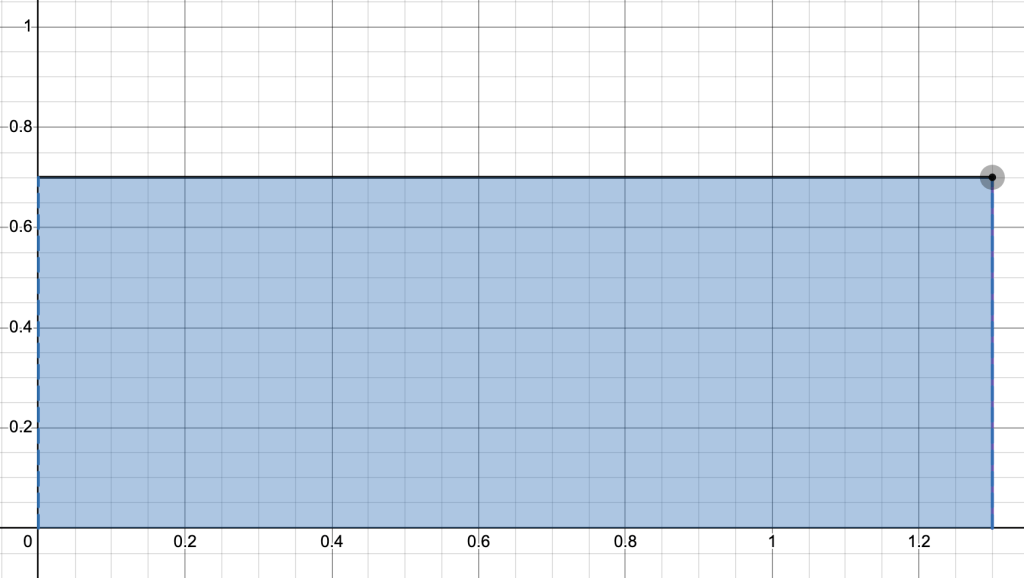
Now if we increase L, the length, by 30%, we get L + .3L= 1.3L
If we decrease W, the width, by 30%, we get W – .3W= .7W.
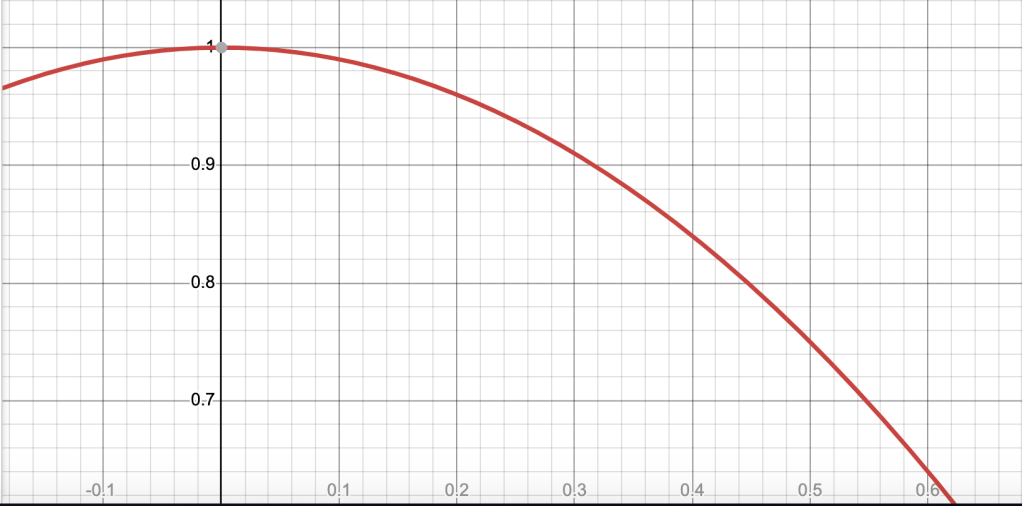
Thus, with the 30% increase and decrease, the new formula for the area of the figure becomes: 1.3L(.7W)= .91LW which means that we have .91 times LW, or .91 times the original area (less than the original area LW!).

This result may seem counterintuitive in that if you decrease one variable by 30 percent and increase the other by 30 percent, you might expect to get the original area, or simply LW, rather than .91LW. The result of .91LW implies a 9 percent reduction of the original area, despite the fact that we increased L and decreased W by the same percentage. The question is: why does the area of the rectangle actually decrease under these conditions?
The simplest algebraic explanation is that if you increase L by a factor of 1.3 (30%), to maintain the same area you would need to divide W by a factor of 1.3, and 1/1.3= .769 (a 23 % decrease) and NOT .7 (the 30% decrease of W that we actually did). Thus, the actual .7 (30% decrease) is significantly different than .769 (the needed 23% decrease to maintain the original LxW). This means that if you increase one variable by 30%, the other variable needs to decrease by 23% to maintain the constant product LW. However, the algebraic explanation of this idea was not sufficient once I encountered a similar problem in economics within a concept known as elasticity (subject in a future post).
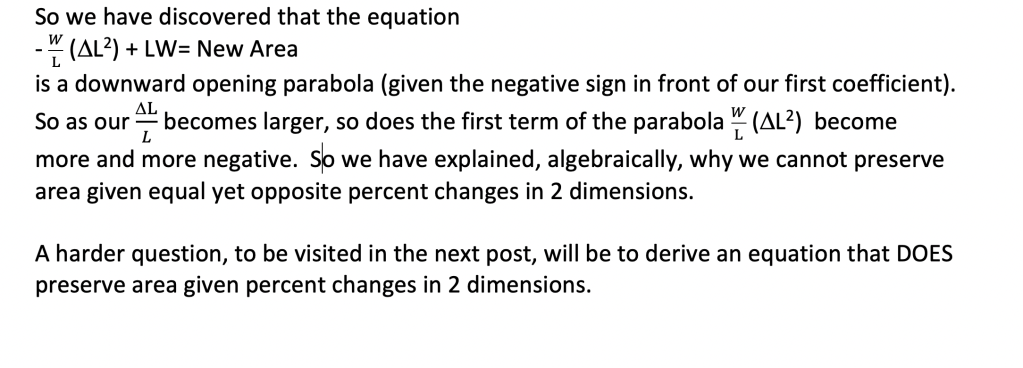
We will attempt to answer the following question with algebra, before pursuing a more detailed solution with calculus in the next post.




 Mathintuitions